
Why Change Orders Keep Hurting Your Project Margins
Late change orders quietly drain project margin. See how paperwork piles up, what a documented change order includes, and how...
Read More → 
AI-powered dashboards highlight key trends instantly and turn complex project data into clear, actionable insights.
Request a demo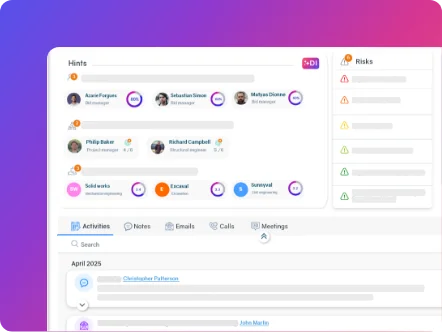
AI-powered dashboards highlight key trends instantly and turn complex project data into clear, actionable insights.

AI-powered dashboards highlight key trends instantly and turn complex project data into clear, actionable insights.
Request a demoAI-powered dashboards highlight key trends instantly and turn complex project data into clear, actionable insights.
It’s the 28th. The PM is on site, finance is waiting on percent-complete figures, and three invoices that should have gone out last week are still sitting in someone’s inbox.
Billing is one of the most important functions in a project-based business, and one of the most consistently underestimated sources of cost and risk. Manual billing processes tie up project and finance teams, introduce errors that turn into disputes, delay cash flow in ways that compound across a whole project pipeline, and quietly erode margins that looked healthy at bid.
Most owners and controllers know their billing process is slower than it should be. Few have actually put a number on what that slowness costs.
For a contractor, consultancy or other project-based firm running progress or milestone billing, the monthly cycle typically means pulling certified quantities or percent-complete from the field or delivery team, applying contract rates line by line, calculating holdbacks and retainage (retention) per contract terms, cross-referencing which change orders (variations) have actually been approved, assembling the invoice package, routing it for internal sign-off, and finally submitting it, often in a specific format the client or consultant requires.
Every step is manual. Every step takes time. Every step is a chance for an error. And the whole cycle repeats every month, for every active project, no matter what else is going on in the business.
Industry data from the Construction Financial Management Association (CFMA) shows finance teams at construction firms routinely spend the equivalent of several full working days per month, per project, on billing-related tasks. For a firm running 10 or more active jobs at once, that’s a real constraint on finance capacity, often forcing overtime at month-end or temporary staff brought in just to get invoices out the door.
Delayed invoicing has a cost most firms underestimate. A billing cycle that runs even 10 days longer than it needs to, on a $2 million monthly billing volume, ties up meaningful working capital, right when the firm is also managing its own payments to suppliers and subs.
As an illustration, at an assumed 8% cost of capital, 10 extra days on $2 million of monthly billing costs roughly $4,400 in financing per cycle, or more than $50,000 over a year. Multiply that delay across a portfolio of active projects and the impact on working capital adds up fast. At the thin margins typical in project work, with net margins of roughly 4–8%, the cost of capital on delayed receivables isn’t a rounding error. It’s cash the firm doesn’t have to run payroll, cover material deposits, or bid on the next job.
Deloitte’s research on cash flow in engineering and construction firms found that companies with faster billing cycles consistently report stronger working capital positions than firms with slower processes, even when the underlying project performance is comparable.
Billing errors aren’t a competence problem. They’re a systems problem. When the data needed for an accurate invoice lives across a PM tool, field reports, an accounting system, and a spreadsheet, assembling it by hand creates room for transcription errors, version mismatches, and missed line items.
Quantity and percent-complete errors. Figures copied by hand from field reports into billing are a common source of mismatch between what the firm invoices and what the client’s own tracking shows.
Retainage and holdback inconsistency. Every contract has different holdback terms: 5%, 10%, sometimes tiered by phase. Calculating that manually across a full project portfolio produces inconsistencies that clients catch, and disputes follow.
Change order inclusion errors. Billing for a change that was agreed verbally but never formally signed off, or missing one that should have been included, is one of the fastest ways to trigger an invoice dispute and a payment delay.
Rate and nomenclature mismatches. On unit-price and public-sector work especially, invoices have to follow the exact line-item structure and coding the consultant or owner requires. A format mismatch, not a pricing disagreement, is often what stalls a certificate of payment.
Each of these takes time to catch, investigate, and resolve. Client relationships that go through frequent billing disputes wear down over time, a commercial risk on top of the immediate cash flow hit.
Manual billing usually runs through several approval steps, each one requiring someone to track down documents, check figures, and confirm the invoice is ready. When approvals happen over email and shared drives, they’re slow, and there’s no clean audit trail. Invoices sit in inboxes. Approvers are on site, in a meeting, or focused on delivery.
This bottleneck is one of the most consistently cited billing frustrations we hear in discovery conversations. PMs who are already managing delivery become the single point of failure in a process that should be able to run without pulling their attention every month.
Firms that have automated their billing process report consistent gains across the board: cycles measured in hours instead of days, error rates that drop close to zero once manual re-entry is eliminated, approvals that run through a defined approval path instead of an email chain, and finance teams spending their time on analysis instead of data-gathering.
Quantities and percent-complete. Manual: copied by hand from field reports. Connected: flow directly from project records.
Contract terms. Manual: rates, holdbacks and retainage applied line by line. Connected: applied automatically from the contract.
Change orders. Manual: checked manually against emails and sign-offs. Connected: only approved changes carry into the invoice.
Approvals. Manual: email chains and shared drives. Connected: a defined approval path with an audit trail.
Finance team time. Manual: data-gathering and re-keying. Connected: final check and analysis.
The operating model is simple: quantities and percent-complete flow directly from project records into the billing system. Contract terms (rates, holdbacks, retainage, approved change orders) apply automatically. The invoice is prepared and put in front of a person for a final check before it goes out, in whatever format the client requires.
Operate’s Financial Management module connects directly to project data and to the accounting systems firms already run, including QuickBooks Online, Sage and Xero, with no separate integration fee. Certified quantities and approved change orders flow into invoicing automatically instead of being re-keyed. Retainage is configurable by contract, so a 10% holdback on one job and a different structure on another don’t require two separate manual processes.
For firms working under strict formatting requirements, such as unit-rate contracts with imposed nomenclature or progress-draw formats showing current, previously approved, and total-to-date amounts, Operate’s invoice templates are built to match exactly what the client or consultant needs, without reformatting by hand every month.
Operate AI‘s Cost Forecasting agent keeps budget-versus-actual data current, so the numbers behind every invoice are accurate the first time. Its Document Intelligence agent reads contracts and RFIs to confirm which changes have actually been approved before they’re billed, cutting off one of the most common sources of disputed invoices at the source.
Firms moving off manual billing consistently report cutting days off their monthly cycle per project. Across a full portfolio, that improvement shows up directly in working capital, and in a meaningfully lower dispute rate.
For any project-based business where margin protection matters, billing efficiency isn’t a back-office detail. It’s a direct contributor to the financial performance of every project you run.

Operate Expert
Our Operate experts work specifically with AEC teams. They'll show you the parts of Operate that are relevant to how you work — and be straight with you about whether it's the right fit.
If you're evaluating software, or if you're paying for a platform your teams have stopped using, it's worth 15 minutes.
Book a discovery call →Every step, from pulling percent-complete to applying contract terms, checking approved changes, routing for sign-off and submitting in the client’s format, is manual and repeats every month for every active project. That workload grows with each project a firm adds.
Every day an invoice is delayed is a day cash isn’t available for payroll, suppliers or the next bid. On $2 million of monthly billing, 10 extra days at an assumed 8% cost of capital costs roughly $4,400 per cycle.
The most common causes are quantity and percent-complete mismatches, inconsistent retainage or holdback calculations, change orders billed without formal approval (or missed), and invoices that don’t match the client’s required line-item format.
Yes. Operate’s Financial Management module connects to QuickBooks Online, Sage and Xero, so approved quantities and change orders flow into invoicing without re-keying.
Want to see how much your billing cycle is costing you? Book a 15-minute call, or see if it fits for your business.
Sources
Construction Financial Management Association (CFMA), Annual Financial Survey, 2023. cfma.org
Deloitte, Cash Flow Management in Engineering and Construction, 2022. deloitte.com
KPMG, Global Construction Survey, 2023. kpmg.com



Start simplifying your projects, aligning your teams, and making smarter decisions today.