
Why Change Orders Keep Hurting Your Project Margins
Late change orders quietly drain project margin. See how paperwork piles up, what a documented change order includes, and how...
Read More → 
AI-powered dashboards highlight key trends instantly and turn complex project data into clear, actionable insights.
Request a demo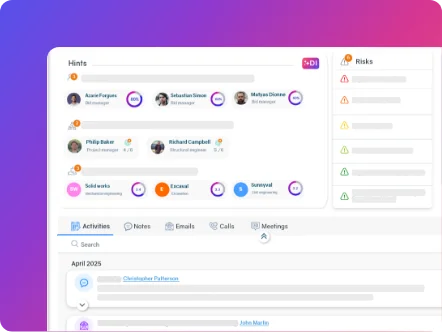
AI-powered dashboards highlight key trends instantly and turn complex project data into clear, actionable insights.

AI-powered dashboards highlight key trends instantly and turn complex project data into clear, actionable insights.
Request a demoAI-powered dashboards highlight key trends instantly and turn complex project data into clear, actionable insights.
The excavator hits unmarked rock on a Tuesday. The foreman makes the call, the crew keeps working, and the change gets a line in the daily log. Three weeks later, nobody is quite sure who approved what.
Change orders are a fact of life in project-based work. Site conditions differ from the drawings, clients make late decisions, scope shifts once work is underway. Every experienced PM and delivery lead knows this. On a consulting or software engagement it sounds different (a client asks for “just one more report”) but the pattern is the same. Change orders remain one of the leading causes of margin erosion on construction and other project-based work, not because they happen, but because of how most firms manage them once they do.
A change order is a formal, written amendment to a project’s contract that adjusts scope, price, schedule, or all three. Depending on the industry and region, the same thing is called a variation, a change request, or a scope change.
Research from the Construction Industry Institute (CII) shows most change order disputes come from delays in documentation and submission, not from disagreement about whether the change actually happened. The change itself is rarely the argument. The argument is about the gap between when it happened on site and when the formal change order landed on the client’s desk.
When a change happens today and the paperwork shows up three weeks later, the client’s memory of the circumstances, who authorized it, and what was verbally agreed has already faded. What was a simple conversation in the moment becomes a negotiation. Recovery on change orders submitted more than two weeks after the triggering event is consistently lower than on those submitted promptly.
On firms running several active projects at once, the documentation burden lands on PMs and superintendents who are already carrying a full delivery workload. Changes get scribbled into a field notebook or a daily log. The formal change order process falls behind. The backlog builds quietly through the project and turns into a real problem at closeout.
Costs already absorbed often can’t be recovered once the client’s approval window has closed or the project phase is done.
Disputes over scope, authorization, and pricing rise in direct proportion to how much time passed between the change and the formal submission.
Project budgets show what look like overruns before the matching revenue is captured, distorting the numbers and pulling management attention into explaining a variance that isn’t really there yet.
Client relationships take a hit when change orders show up as surprises at project close instead of routine updates through delivery.
Final accounts turn into extended negotiations instead of quick closeouts, eating PM time exactly when it should be freed up for the next job.
There’s a cost dimension here that goes beyond the paperwork delay itself. Loaded labor is consistently under-counted on change work: a $30/hour tradesperson really costs closer to $42–45/hour once burden is included, and small material costs on a change get missed entirely when pricing is done from memory rather than current data. On a project with a handful of change events, these gaps add up to a real dent in the final margin.
A properly documented change order needs:
A clear description of the scope change
The cause of the change
The schedule and cost impact
Who authorized it
The pricing basis
The contract clause the claim sits under
Pulling that together by hand from emails, field reports, drawings, and the schedule takes time that delivery teams rarely have to spare. So it gets deferred until there’s time. On a busy job, there rarely is. The backlog grows, the recovery window narrows, and the margin gap widens without anyone deciding it should.
This shows up constantly in field conversations: firms running everything from Excel to a partially adopted PM tool describe change orders as something they catch up on at month-end rather than something they capture as it happens, and by month-end, half the detail needed to price it accurately is already gone.
Even change orders submitted promptly are hard to price accurately. The real cost of a change depends on current labor rates, current material costs, the schedule impact, and the overhead that should be allocated to the extra scope. When that data lives across a general ledger system, a separate estimating tool, and a spreadsheet, pulling it together fast enough to price a change while the facts are still fresh takes real effort, or a system that already has it connected.
Firms that price change orders from current, accurate data recover more than firms pricing from memory or an outdated rate sheet. The gap isn’t always large on a single change order. Across a project with dozens of them, it adds up to a meaningful hit to the bottom line.
Firms with the strongest change order recovery treat documentation as something that happens in real time, not as an end-of-month task. Changes are captured as they occur, priced from current cost data, and submitted on a defined cycle rather than whenever someone finds the time. The admin load is spread across the project instead of piling up at the end.
Technology that connects site activity, the schedule, and cost data lets change orders get prepared quickly and accurately. When the information needed to document a change is already sitting in a connected system, the burden drops low enough that a PM can handle it as part of the normal week instead of as an extra job on top of an already full one.
Operate AI‘s Document Intelligence agent reads contracts, specs, and RFIs to surface obligations and flag likely scope changes as they emerge, not after they’ve already been absorbed. When a change comes up, it pulls the relevant cost data from the connected project record, references the contract clause it falls under, and drafts the change order for the PM to review, rather than leaving that assembly work to be done from scratch.
The Cost Forecasting agent tracks spend against budget in real time and flags deviations as they start to develop, so a change that’s beginning to happen shows up while there’s still time to document it, instead of surfacing as a mystery variance three months later. Because Operate keeps timesheets, procurement, and budgets in the same connected system, pricing a change draws on current labor and material costs rather than a rate sheet that’s months out of date.
For firms running unit-rate or public contract work, where the nomenclature and format of every deliverable has to match the consultant’s structure exactly, that same connected data model means a change order can be documented and priced in the same structure the rest of the project already uses, with no separate reformatting exercise.
Every change stays tracked, timestamped, and logged, so the backlog that usually builds toward closeout doesn’t get a chance to form. Submission cycles hold. Recovery improves, because the claim is documented, submitted promptly, and priced from real numbers instead of best guesses. Approved changes also carry straight into billing, so invoices reflect what was actually agreed.
For project-based businesses where change order management has quietly been a source of margin leakage, closing that gap has a direct, measurable effect on project financial performance.

Operate Expert
Our Operate experts work specifically with AEC teams. They'll show you the parts of Operate that are relevant to how you work — and be straight with you about whether it's the right fit.
If you're evaluating software, or if you're paying for a platform your teams have stopped using, it's worth 15 minutes.
Book a discovery call →Because of timing, not the change itself. The longer the gap between the change and the formal submission, the more the client’s memory of what was agreed fades, and the more likely a simple conversation turns into a negotiation.
As close to the change as possible. Dispute risk rises with the gap between the change and the submission, so the strongest firms capture changes as they occur and submit on a defined cycle rather than at month-end.
A description of the scope change, its cause, the schedule and cost impact, who authorized it, the pricing basis, and the contract clause the claim sits under.
Operate AI’s Document Intelligence agent flags likely scope changes as they emerge and drafts the change order from connected project data, including the relevant cost data and contract clause, for the PM to review.
Want to stop losing recovery on late change orders? Book a 15-minute call, or see if it fits for your business.
Sources
Construction Industry Institute (CII), Change Management: Effectiveness of Change Management Practices, 2022. construction-institute.org
KPMG, Global Construction Survey, 2023. kpmg.com
Project Management Institute, Construction Extension to the PMBOK Guide, 2016. pmi.org



Start simplifying your projects, aligning your teams, and making smarter decisions today.