
5 Best Construction Bid Management Software Tools in 2027
Compare 5 construction bid management software platforms for AEC teams — cost tracking, bid-to-project handoff, and AEC-specific billing, side by...
Read More → 
AI-powered dashboards highlight key trends instantly and turn complex project data into clear, actionable insights.
Request a demo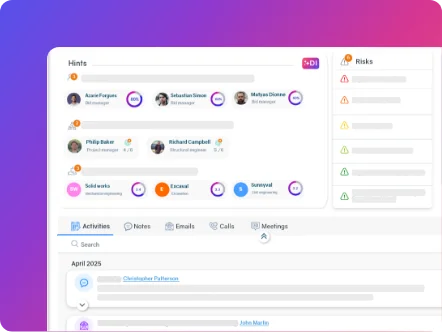
AI-powered dashboards highlight key trends instantly and turn complex project data into clear, actionable insights.
Most construction software fails not because the technology is wrong — but because it was never designed for a construction site.
A platform that impresses in a demo can be completely unusable on a live construction site. Variable signal, gloved hands, decisions made under pressure — none of that was in the room when the software was built. So within a few weeks of rollout, site teams go back to WhatsApp, paper timesheets and spreadsheets. The licence keeps getting paid. The tool stops getting used.
Across UK construction, this pattern repeats itself constantly. The issue is not resistance to technology. It is software designed around how people imagine construction works — not how it actually operates on site.
Why does construction software often fail on site?
Most construction project management software is built with a desktop environment in mind. Clean interfaces, multiple open tabs, reliable broadband, and a user sitting at a desk with time to navigate a complex system.
That is not a construction site. A site manager is moving between areas, often without a strong signal, wearing gloves, making decisions quickly. A mobile experience that is simply a shrunken version of the desktop platform is not a mobile solution – it is a compromise that satisfies neither environment.
When software does not work naturally in the conditions where it needs to be used, teams stop using it. Not because they are resistant to technology, but because the tool creates friction rather than reducing it.

How do you get construction site teams to use new software?
Adoption is where most digital construction projects succeed or fail. It is also where the gap between head office expectations and site reality is widest.
A platform introduced without proper onboarding, without buy-in from the people who will use it daily, and without a clear benefit to those individuals – not just to the business – will struggle to take hold. Site teams are busy. They work to tight schedules. If a new tool adds steps to their day without obvious payback, they will find workarounds.
Several factors consistently undermine adoption in UK construction:
Adoption is a people challenge as much as a technology one. Software that respects this reality is built differently from software that ignores it.
Can construction software have too many features?
Yes – and this is a more common problem than it appears. Enterprise-grade platforms built for large contractors often arrive in the SME market with every module included, every setting configurable, and every dashboard customisable. The result is a system that takes months to implement and requires a dedicated administrator to manage.
For a contractor running five or ten live projects, the priority is not configurability. It is clarity. A site manager needs to know the current programme status, what is outstanding, and whether costs are tracking to budget. That information should be visible in seconds, not buried under layers of navigation.
Complexity is not a selling point for site teams. It is a barrier.
Why does construction software need to integrate with accounting tools?
Construction businesses already use tools they trust: accounting platforms, estimating software, payroll systems. When a new site management software cannot talk to those systems, it creates parallel data entry — the exact problem it was supposed to solve.
An invoice is raised on site but does not appear in the accounts until someone manually copies it across. A cost overrun is flagged in the project tool but the finance team are working from a different set of figures. Decisions are made on incomplete information.
Genuine integration – not a data export, but a live two-way connection – is what allows site and finance teams to operate from a single source of truth. Without it, data silos persist and the software adds administration rather than removing it.

Why is real-time data important in construction project management?
Construction moves quickly. A delayed material delivery, an unplanned absence, a variation to scope – each one has knock-on effects that compound if not caught early. Real-time visibility is what allows site managers and business owners to respond rather than react.
Many construction software platforms update on a delay – information entered on site takes time to appear in the system, reports are generated weekly, and by the time a problem is visible it has already affected programme and cost.
When everyone – from the site team to the commercial manager to the business owner — is looking at the same live data, decisions improve and surprises reduce. That should be a baseline expectation of any modern construction project management software, not a premium feature.
Does user experience really matter in construction software?
Consistently, yes. A platform that takes ten clicks to log a task, that loses form data when the signal drops, or that presents information in a way that requires interpretation rather than delivering clarity will be avoided.
User experience in construction software is not about aesthetics. It is about how quickly a person can do what they came to do and get back to the job. Every unnecessary step, every confusing label, every screen that does not load on a mobile network is a small friction – and small frictions accumulate into abandoned tools.
The construction businesses that get real value from digital tools tend to choose platforms with a consistent set of characteristics:
These are not aspirational features. They are the practical conditions under which site teams will actually use a tool day to day.
Operate was built by people with direct experience of construction operations — not adapted from a generic project management platform. That difference shapes everything from the mobile interface to the way data flows between modules.
One platform, end to end. From tender and estimation through to project execution, workforce management, and financial reporting — Operate connects the full project lifecycle without requiring teams to switch between systems or re-enter data.
Designed for site use. The mobile experience is a proper working interface, not a cut-down version of the desktop. Site teams can log hours, update progress, record site diaries, and flag issues in real time — from any device, in any signal condition.
Quick to adopt. Pre-built templates and a straightforward interface mean teams can start using Operate without lengthy implementation projects. The aim is to simplify the day, not add to it.
Live visibility across projects. Dashboards give site managers, project managers, and business owners a clear, current picture of programme, cost, and resource — so issues are spotted early and decisions are made on accurate information.
Integrates with your existing tools. Operate connects with accounting platforms, ERP systems, and the other tools construction businesses already rely on — so data flows where it needs to, without manual duplication.

Operate Expert
Our Operate experts work specifically with AEC teams. They'll show you the parts of Operate that are relevant to how you work — and be straight with you about whether it's the right fit.
If you're evaluating software, or if you're paying for a platform your teams have stopped using, it's worth 15 minutes.
Book a discovery call →Construction software does not fail because construction teams cannot adapt to technology. It fails because too much of it is designed without a genuine understanding of site conditions, team dynamics, and the practical realities of running a construction project.
The businesses getting the most from digital tools are not necessarily those with the biggest technology budgets. They are the ones that chose software built around how their teams actually work — on site, under pressure, with limited time and variable connectivity.
Getting that choice right makes the difference between a tool that sits unused and one that becomes part of how the business operates every day.
Construction software fails on site because it is designed for desktop use, not field conditions. Site teams work with variable signal, gloved hands, and no time to navigate complex interfaces. When the mobile experience is a scaled-down version of the desktop platform rather than a purpose-built field tool, teams revert to WhatsApp, paper timesheets, and spreadsheets — while the software licence continues to be paid for unused. Operate is built mobile-first, designed specifically for site conditions across the AEC industry.
The best construction project management software for UK SMEs prioritises mobile-first design, fast onboarding, and live data visibility across site and office. Unlike enterprise platforms built for Tier 1 contractors, software designed for smaller UK construction businesses should connect tendering, project execution, workforce management, and financial reporting in one system — without requiring a dedicated administrator or a lengthy implementation programme. Operate is available from £3 per user per month. Pay per user, not per project or asset – costs stay predictable as you grow – designed specifically for AEC teams across the UK.
Construction site teams adopt new software when it genuinely simplifies their working day. The three factors that consistently undermine adoption in UK construction are: insufficient training before go-live, no involvement of site teams in the selection process, and a mobile interface that does not work reliably in real site conditions. Software chosen with site teams rather than for them achieves significantly higher day-to-day usage. Operate is designed for fast onboarding — most teams are up and running without a lengthy implementation project.
Construction management software should integrate directly with accounting systems through a live two-way connection, not a manual data export. Without genuine integration, cost data must be entered twice — once on site and once in the accounts — which creates the data duplication that the software was supposed to eliminate. When site activity and financial data are connected in real time, cost overruns are identified earlier and decisions are based on accurate figures. Operate integrates directly with leading accounting platforms used by UK construction businesses, keeping site and finance teams working from the same live data.



Start simplifying your projects, aligning your teams, and making smarter decisions today.