
5 Best Construction Bid Management Software Tools in 2027
Compare 5 construction bid management software platforms for AEC teams — cost tracking, bid-to-project handoff, and AEC-specific billing, side by...
Read More → 
AI-powered dashboards highlight key trends instantly and turn complex project data into clear, actionable insights.
Request a demo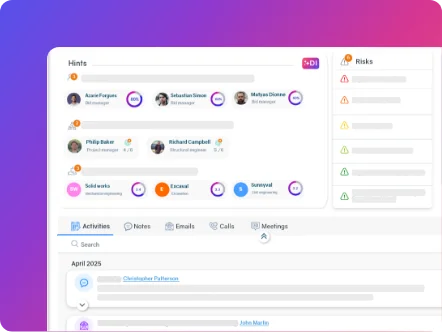
AI-powered dashboards highlight key trends instantly and turn complex project data into clear, actionable insights.
Operate is the strongest fit for AEC bid managers who need bid data to carry straight into project execution without re-entry. Procore, Autodesk Construction Cloud, Trimble Construction One and Deltek Vantagepoint each cover part of that job – the difference is how much of the bid-to-project gap they close on their own versus how much configuration it takes to connect the pieces.
AEC bid managers deal with a specific operational gap: the space between winning a contract and delivering it profitably. General project tools handle scheduling or document storage, but they rarely connect bid data to field execution, cost tracking, and financial reporting in one system. Operate is purpose-built for AEC to close that gap, and it’s one of five platforms worth evaluating if you need real-time cost visibility from submission day through final invoice.
This article compares five operations platforms on the things that matter most to bid managers and operations leads: continuity from bid to delivery, financial control, and AEC-specific capability.
Bid managers need more than a feature checklist. The real question is whether a platform can carry bid data into execution without re-entry, keep costs visible in real time, and adapt to AEC contract types like progress billing or milestone-based delivery.
Here’s what we evaluated:
Operate connects bids, projects, workforce, equipment, and financial management in one modular platform. For bid managers, the difference that matters is data continuity: a winning bid becomes an active project without re-entering scope, pricing, or contract details.
The bid management module connects CRM, tender, RFQ, and contract activity in a single system. Cost data updates automatically as work progresses, so committed costs, budgets, and margins stay visible across every project.
AI-powered dashboards surface risk and forecasting signals so teams can act on variances before they become overruns. Field teams capture timesheets, progress, and site logs on mobile devices, and that data feeds straight into project financials.
Capabilities
Pros
Cons

Operate Expert
Our Operate experts work specifically with AEC teams. They'll show you the parts of Operate that are relevant to how you work — and be straight with you about whether it's the right fit.
If you're evaluating software, or if you're paying for a platform your teams have stopped using, it's worth 15 minutes.
Book a discovery call →Procore offers project management, preconstruction, and financial modules. Its bid management tool focuses on connecting general contractors with subcontractors through invitations and bid levelling.
Procore’s document management covers drawings, RFIs, and submittals. Financial tools cover budgets, change orders, and invoicing, though bid data and project financials sit in separate modules that need configuration to link.
Capabilities
Pros
Cons
Autodesk Construction Cloud — now being folded into Autodesk Forma, with some product names updated as part of that transition — connects design data from Revit and AutoCAD with field execution tools through BuildingConnected, Autodesk Build, and BIM Collaborate. For bid managers, BuildingConnected handles bid invitations and subcontractor qualification.
The platform’s strength is linking BIM models to field coordination, so design intent stays visible during construction. Financial modules cover budgets, cost tracking, and forecasting at the project level.
Capabilities
Pros
Cons
Trimble Construction One brings together estimating, field operations, and project management through products like B2W Estimate, B2W Track, and Viewpoint Spectrum. It’s oriented toward heavy civil, highway, and utility contractors.
Estimating includes assembly-based takeoff and historical cost libraries. Field tools capture production quantities, equipment hours, and materials in real time for job costing.
Capabilities
Pros
Cons
Deltek Vantagepoint is a project-based ERP built specifically for architecture, engineering, and consulting firms — it covers project planning, resource management, accounting, and compliance tracking.
For A/E firms, Vantagepoint connects proposals and project plans with resource allocation and financial performance. Subcontract and tender management features handle consultant and vendor procurement.
Capabilities
Pros
Cons
The decision between platforms often comes down to how well they handle the handoff between preconstruction and project delivery. A tool that forces you to re-enter bid data into a separate project module recreates the exact visibility gap you’re trying to close.
Look for platforms that carry estimates, contract terms, and cost assumptions directly into execution. That removes reconciliation work and gives you a running financial picture from day one of a project.
Also check how each platform handles AEC-specific contract billing. Progress billing, milestone-based payments, and unit-based delivery are standard in construction and engineering. If a tool needs workarounds for these billing types, your team will spend time on configuration instead of delivery.
When bid data feeds directly into project controls, cost baselines are accurate from day one. Change orders, committed costs, and actual spend track against the original bid, giving early warning on margin erosion.
Disconnected systems introduce a lag between what the field reports and what finance sees. BuiltWorlds’ 2026 Annual Preconstruction Benchmarking Report found that bid management adoption has climbed past 70% regular use industry-wide, with the pilot cohort shrinking as more teams settle on primary platforms — a sign that preconstruction data is increasingly expected to plug into a firm’s core systems rather than sit apart from them.
Operate is built around that expectation: bid, project, and finance data live in one system, so financial reporting reflects actual field progress at any point in the project.
Operate gives AEC bid managers one connected workspace for the project lifecycle. It carries bid data, contract terms, and cost estimates directly into execution, so financial visibility starts the moment a project is awarded.
That continuity is the core differentiator. Traditional tools require moving data between separate bid, project, and finance systems. Operate connects CRM, tender, RFQ, contract, project delivery, and supply chain modules in one platform designed around how AEC firms actually operate.
Operate’s AI-powered forecasting and risk detection help teams spot cost variances and schedule risks before they escalate. And because pricing is based on users, not project value, software costs stay predictable as a portfolio grows.
Book a 15-minute call to see how Operate handles your bids, contracts, and teams.
Bid management covers finding opportunities, preparing estimates, coordinating tenders, and submitting proposals. Operations management starts once a project is awarded, covering execution, cost tracking, resource allocation, and field coordination.
They’re built for broad audiences, so they lack AEC-specific contract types like progress billing and milestone-based delivery. They also tend to keep bid data separate from project financials, creating a visibility gap between preconstruction and delivery.
Tracking actual costs against bid estimates during execution builds a history of real project data, which future estimates can be built on instead of relying on assumptions alone.
Most platforms in this category offer some form of accounting or ERP integration. Operate integrates with Dynamics 365, QuickBooks, Sage etc.
AI in this category is typically used for risk detection, cost forecasting, and bid scoring – surfacing cost variances, schedule risk, and resource conflicts so bid managers can act on current data rather than delayed reports.



Start simplifying your projects, aligning your teams, and making smarter decisions today.