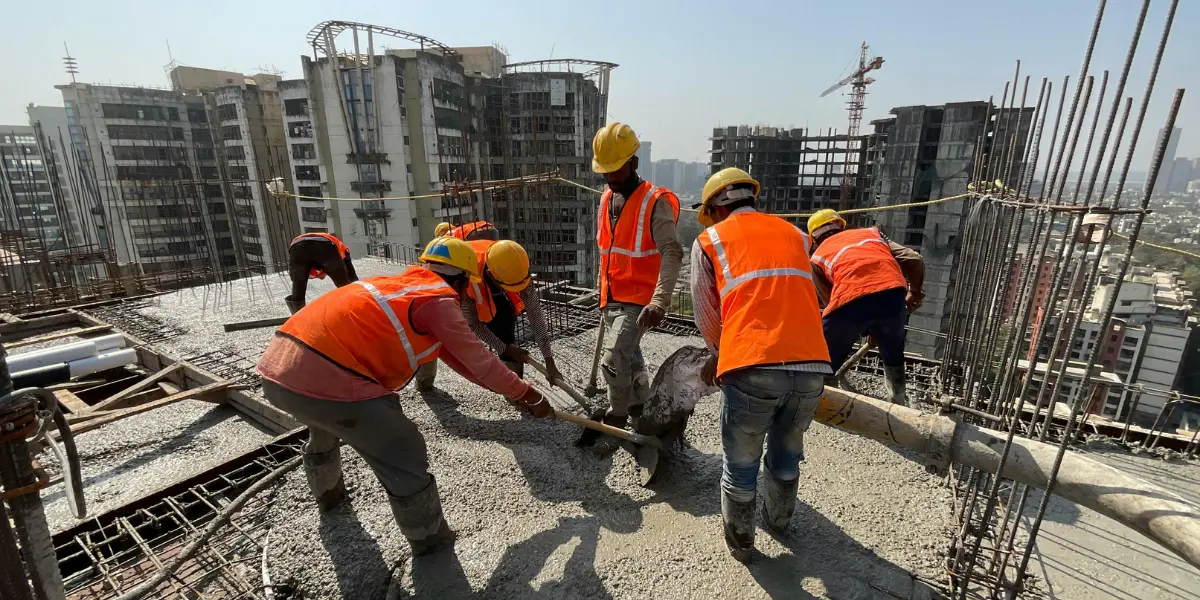
Why Change Orders Keep Hurting Your Project Margins
Late change orders quietly drain project margin. See how paperwork piles up, what a documented change order includes, and how...
Read More → 
AI-powered dashboards highlight key trends instantly and turn complex project data into clear, actionable insights.
Request a demo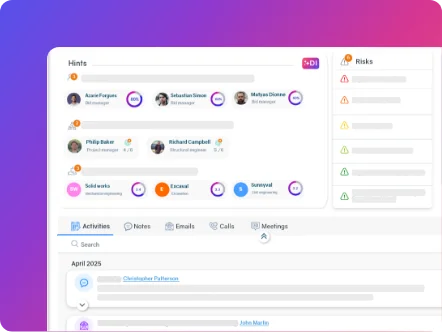
AI-powered dashboards highlight key trends instantly and turn complex project data into clear, actionable insights.

AI-powered dashboards highlight key trends instantly and turn complex project data into clear, actionable insights.
Request a demoAI-powered dashboards highlight key trends instantly and turn complex project data into clear, actionable insights.
Quick Facts: Construction Safety Management

Construction sites are dangerous by nature. But most safety failures are not caused by the hazards themselves. They stem from gaps in documentation, missed certification expirations, and compliance processes that cannot keep pace with the work.
If you are a Safety Officer or Site Manager running multiple project sites, the compliance burden does not stop at knowing the rules. It comes down to proving you consistently followed them across every site at any point in time.
Most AEC firms do not have a safety knowledge problem. They have a systems problem.
The rules are clear. OSHA’s construction standards under 29 CFR 1926 cover everything from fall protection to silica exposure to confined space entry. The challenge is operationalizing those standards across sites where conditions change daily, crews rotate, and subcontractors bring their own documentation gaps.
Paper forms get lost. Spreadsheets go out of date. A training record that should exist on three sites often lives on one person’s laptop. When an OSHA inspector walks onto your site, you are not just expected to be compliant. You are expected to prove it, on the spot.
That gap between actual compliance and provable compliance is where most firms get into trouble.
Operate’s construction management software is built around closing that gap, connecting safety processes to the rest of your project operations so nothing falls through.
Being audit-ready means your documentation is complete, current, and accessible. Not just for one site, but for all of them, at the same time.
In practice, this is where paper-based safety management breaks down. A mid-size commercial contractor was fined $142,000 in OSHA penalties after an inspection found incomplete training records. They believed the training had happened. They just could not prove it. The records existed across multiple filing systems on multiple sites, and pulling them together under inspection conditions was not possible.
Audit-readiness requires:
When this information lives in one place rather than across clipboards, inboxes, and site offices, an audit becomes a reporting task rather than a crisis.
Credential tracking is one of the most time-consuming parts of construction compliance management and one of the easiest to let slip.
On a single site with a stable crew, keeping track of certification expiry dates is manageable. Across five sites with rotating subcontractors, it becomes a full-time job. A worker whose first aid cert expired last month, a subcontractor whose insurance lapsed, and an operator without a current equipment license. Any of these creates liability the moment something goes wrong.
The typical manual approach:
A purpose-built health and safety software for construction automates this. Expiry dates are tracked against each worker and subcontractor record. Alerts fire before credentials lapse. And access can be restricted for anyone whose documentation is not current, before they set foot on site.
Near-miss reporting is one of the strongest predictors of site safety and one of the most underused tools in construction.
When something almost goes wrong on site, that event carries critical information about where your systems are failing. But near-misses only become useful data if they get reported. In most construction environments, reporting is slow, paper-heavy, and inconvenient enough that workers skip it, especially for incidents with no immediate consequences.
The result is a blind spot. Without near-miss data, Safety Officers lose the early warning system that could prevent serious injuries. When OSHA investigates a serious incident, the absence of near-miss records also signals a safety culture problem, which can increase penalty severity.
Mobile-first incident reporting changes this. When workers can log a near-miss from their phone in two minutes on the spot, reporting rates go up. The data trail builds in real time. Safety officers get visibility into where hazards are clustering before an injury occurs.
No two construction sites carry the same risk profile. A high-rise in a dense urban area has different hazards than a road project or a data center fit-out. Managing safety across a portfolio of projects means staying on top of site-specific risks simultaneously, which is not possible without the right infrastructure.
The problem with manual hazard assessments is that they create isolated snapshots. A site manager completes a risk assessment for Site A. Another completes one for Site B. Those two documents never talk to each other, and the Safety Officer reviewing them has no way to identify patterns or shared risks across the portfolio.
Here’s a software approach to this:
Good construction safety management software does not just digitize your existing paper processes. It restructures them.
If you are evaluating platforms, here is what to look for:
Operate’s Health, Safety, and Compliance module is built around these capabilities, designed specifically for AEC firms managing complex, multi-site operations rather than being adapted from a generic EHS template.
Firms that treat safety compliance as a system rather than a checklist do not just avoid fines – they win more work. Clients and principal contractors increasingly require documented safety performance as part of the bid process. Insurance premiums are lower for firms that can demonstrate consistent, auditable safety records. And crews stay longer at firms where safety is taken seriously.
The firms still running safety on spreadsheets and paper forms are not just carrying compliance risk. They are carrying competitive risk.
Managing safety compliance across multiple sites shouldn’t mean juggling spreadsheets, chasing expired credentials, and hoping your documentation holds up under audit. Operate brings every safety workflow into one connected platform, so your team is always audit-ready.
Book a demo to see how it works, or explore pricing to find the right plan for your team.
Construction safety management software is an online software solution designed to streamline safety data, track certifications and compliance reports, handle incident reporting, and prepare multi-site teams for auditing. While general environmental, health, and safety software exists, construction-related software is based on the dynamics specific to construction sites, such as rotating crews, subcontractor management, and OSHA construction requirements in 29 CFR 1926. With Operate’s safety module, you can tie all of this together in one process.
It creates a verifiable, timestamped record of every safety activity, covering training completions, inspections, incident reports, corrective actions, and subcontractor credentials. When an OSHA inspector arrives, your documentation is centralized and accessible rather than scattered across site offices. Operate automates the tracking and alerting that keeps those records current and complete.
Yes, and multi-site visibility is one of the primary reasons firms move away from paper-based systems. A platform like Operate gives Safety Officers a portfolio-level view of risk, open corrective actions, expiring credentials, and incident trends across all active sites from a single dashboard, rather than chasing updates from individual site managers.
A generic EHS platform is made for either manufacturing or office settings according to OSHA general industry regulations (29 CFR 1910). Construction-specific EHS platforms will work based on the specific hazards associated with construction projects, including 29 CFR 1926. Using a generic tool often means building workarounds for requirements that a construction platform handles by default.
When safety tools work on a phone in the field, incident reporting happens in real time rather than at the end of a shift. Near-miss data gets captured. Inspection checklists get completed on-site. Training sign-offs happen where the training happens. Mobile access closes the gap between what occurs on site and what ends up in the compliance record. Operate is built for field use across devices.
According to OSHA, the top violations in 2025 were fall protection (5,260 citations), hazard communication, scaffolding, respiratory protection, and ladders. Most of these are preventable with consistent inspection routines and documented training, which is exactly what construction safety management software automates. Operate tracks inspection schedules, alerts on overdue activities, and maintains training documentation.



Start simplifying your projects, aligning your teams, and making smarter decisions today.